
Wednesday 10th to Sunday 14th September 2025
Following the teaser circulated to members in early December 2024, the organisers invited members to express their interest in the Autumn Voyage 2025, a return visit to the ITER experimental fusion reactor site at Cadarache in Provence. Four options were proposed, for single or double room accommodation, with or without group travel.
Accommodation for 50 Voyagers was pre-booked at the 4 star Mercure Pont d’Avignon Hotel in the city centre, adjacent to the Palais des Papes, and the technical visit to ITER was confirmed.
The 5 day and 4 night Voyage runs from Wednesday 10th to Sunday 14th September, with group travel from London St Pancras by Eurostar and TGV via Lille Europe. All Voyagers share the same technical and cultural programme, with a locally hired coach for the daily excursions. Voyagers can also make their own way to Avignon: the most convenient airport is Marseille, then a taxi. The hotel has spaces in the adjacent public car park, and additional nights are available at the group rate for those wishing to arrive early or extend their trip.
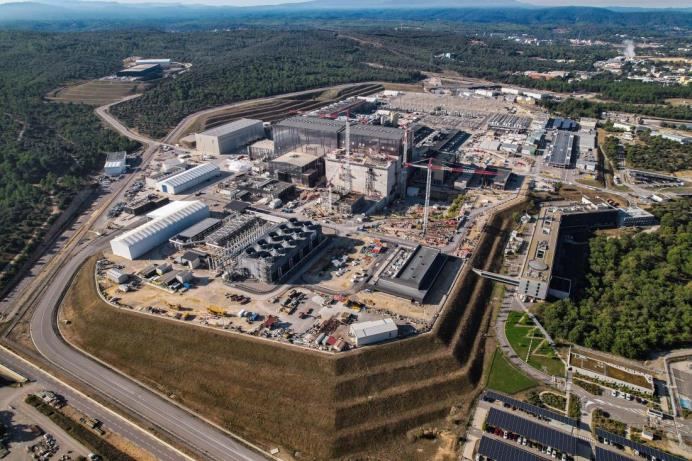
Technical Visit: ITER
The idea for an international joint experiment in nuclear fusion was first launched in 1985 with seven collaborating ITER Members: China, the European Union, India, Japan, South Korea, Russia and the USA. Today 33 nations are collaborating to build the world’s largest Tokamak, a magnetic fusion device designed to prove the feasibility of fusion as a large-scale and carbon-free source of energy, based on the same principle that powers our Sun and stars.
Land at Cadarache in south-east France was donated to the project by the French Government and is now international territory, with stringent security protocols to access the site. At the previous IESF Voyage to ITER in 2014, the foundation plinths and base slab for the Tokamak building were under construction. In 2020 the central Tokamak building was handed over and machine assembly began, and all building and civil works were completed in 2023.
The ITER Tokamak is nearly 30 metres tall and weighs 23,000 tonnes. It is made up of an estimated one million parts. This cutaway diagram shows the central solenoid, the “backbone” of ITER’s magnet system, which induces a powerful current in the plasma and maintains it during long plasma pulses. At 13 metres tall, 4 metres wide and weighing 1,000 tonnes, it is one of the largest components of the machine.
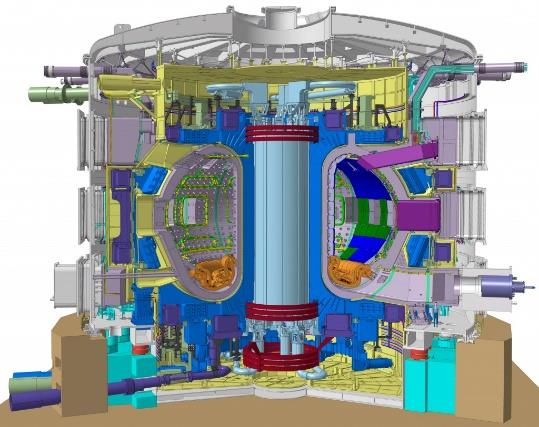
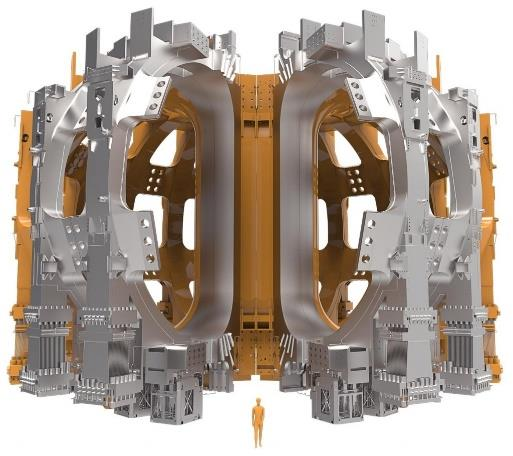
The solenoid is surrounded by the vacuum vessel in which the super-heated plasma circulates. The stainless steel vacuum vessel houses the fusion reactions and acts as a first safety containment barrier. It is a six storey high, double-walled, hermetically sealed steel container weighing 800 tonnes, formed of nine sectors welded together into an annulus, with 44 ports for remote handling, diagnostics, heating and vacuum systems. Eighteen “D”-shaped toroidal field magnets surround the vessel to confine the plasma particles.
Briefings from senior ITER staff will explain the project background and work in progress before a site visit into the Tokamak Hall. Although everything is on a massive scale, this is a research project to test the viability of the theory. If and when a commercially viable Tokamak is built to produce electricity for the National Grid, the plant will be much larger.
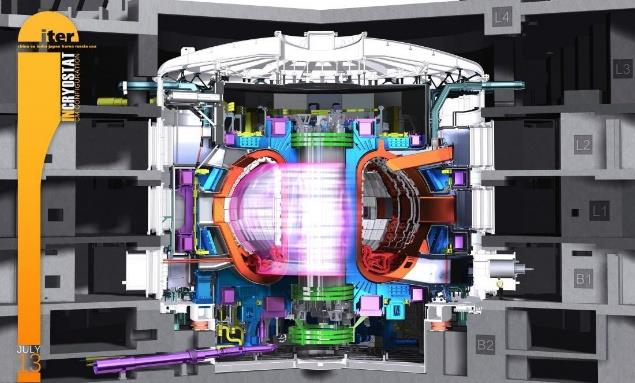
Rather than just providing finance, the contributing nations fabricate different parts of the project, which are shipped to the port of Fos near Marseille and taken to site by lorry for assembly. First plasma was initially planned for 2025, but was delayed when the first installed Tokamak segment, which was imperfect, had to be disassembled and rebuilt on site. The segments are now being installed correctly and a revised commissioning programme was issued in 2024. Full magnetic energy is now planned for 2036, three years later than first planned, with the deuterium-tritium operation phase starting in 2039, a four year delay.
Cultural Visits
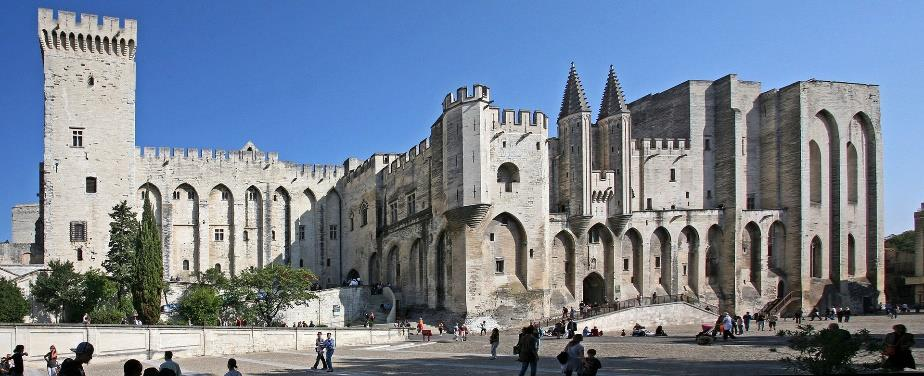
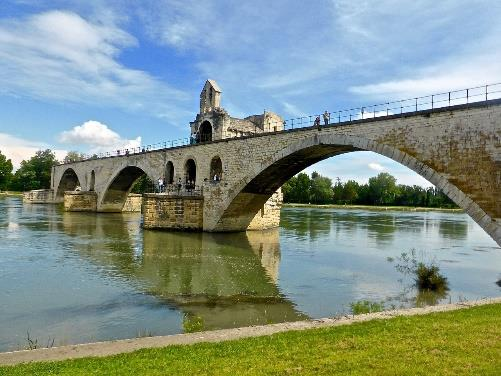
Avignon was the centre of western Christianity for nine successive Popes during the 14th and early 15th centuries. The monumental Papal Palace is the largest Gothic palace in the world. The St Bénezet Bridge, well known from the children’s song “Sur le Pont d’Avignon”, juts out halfway across the River Rhône and was once the old pilgrim route into the city. Both will be visited during the trip.
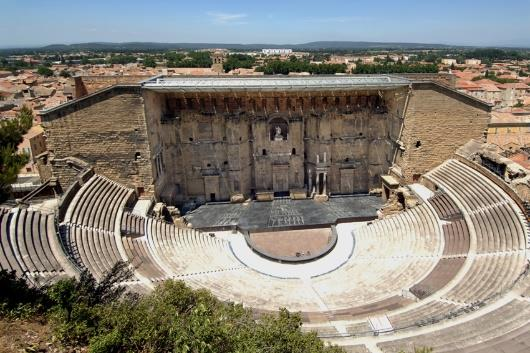
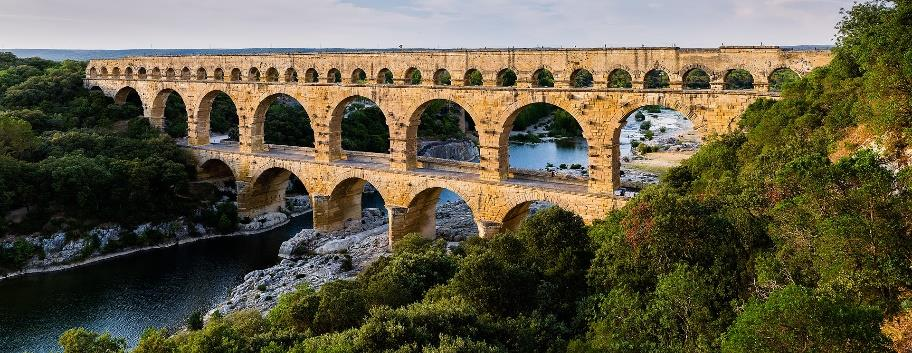
Provence has a long history dating back to the Roman Empire, with many landmarks from this period around Avignon. A half day coach tour to Orange will visit the spectacular semi-circular Roman antique theatre, which hosts concerts and light shows during the summer, and a full day excursion takes in the Pont du Gard aqueduct.