

Spring Voyage to the North West of England, 13–17 May 2026. This is the first of three reports; see also day 2 and day 3.
Our trip began with an illustrated talk by a local guide, Roy, in our hotel in the centre of Liverpool, which was the base for our Spring Voyage to the North West of England. Roy gave us an entertaining potted history of the city of Liverpool and his biased support for Everton football club! (which was not appreciated by your editor). Roy was with us for the whole of our voyage, providing an insight into all the areas we visited in the North West.
Thursday 14th May: Liverpool Metropolitan Cathedral
On the first morning of the tour the coach party was driven up Duke Street passing the entrance into China Town with the Gateway Arch and 200 dragons dating from 1834, before going into Rodney Street, the Liverpool equivalent of Harley Street. We saw the blue plaque on the wall outside No 4 where Brian Epstein was born, and Hardman’s House, former residence and studio of photographer Edward Hardman. Proceeding along Hope Street we passed the Philharmonic Hotel and Dining Rooms, frequented by musicians from the Philharmonic Orchestra, before passing the Philharmonic Hall. Continuing along Huskisson Street to Falkner Square we saw its Georgian houses with evidence of windows which had been bricked up to avoid Window Tax. A famous resident of the square was William Huskisson, MP for Liverpool, who was killed by the Rocket steam engine in an accident on the opening day of the Liverpool to Manchester railway in 1830. Proceeding along Canning Street, named after George Canning PM, we returned towards central Liverpool passing the site of the Rialto Cinema destroyed during the Toxteth Riots, the first School for the Blind and St Luke’s church, bombed during WWII, before passing up Copperas Hill alongside the Adelphi Hotel, where passengers for trans-Atlantic voyages would stay, and on to the Metropolitan Cathedral.
Liverpool Metropolitan Cathedral (known locally as Paddy’s Wigwam) is the largest Catholic cathedral in England. The Lutyens Crypt is the only part of the original design for the cathedral to be built.
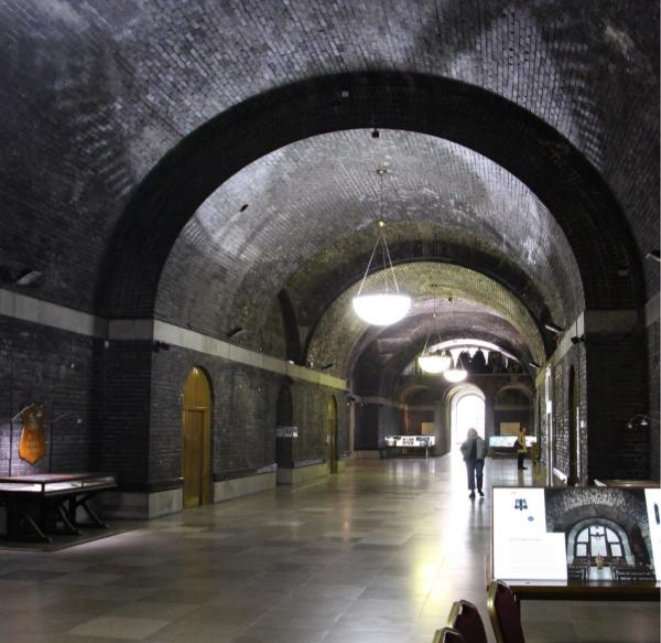
Work started in 1933 but progress was severely delayed during WWII and was halted in 1958 upon completion of the Crypt as a result of rising costs. The present design, the result of a competition held in 1959, was awarded to Frederick Gibberd. Construction took place between 1962 and 1967, and Taylor Woodrow was the contractor.
Initially, there was an opportunity to view the outside of the southern entrance, which faces Hope Street with a view of the Anglican Cathedral, and study the form of the building with its buttresses which support the deep concrete cylindrical ring holding up the 2cm thick stained-glass windows under the Crown of Thorns.
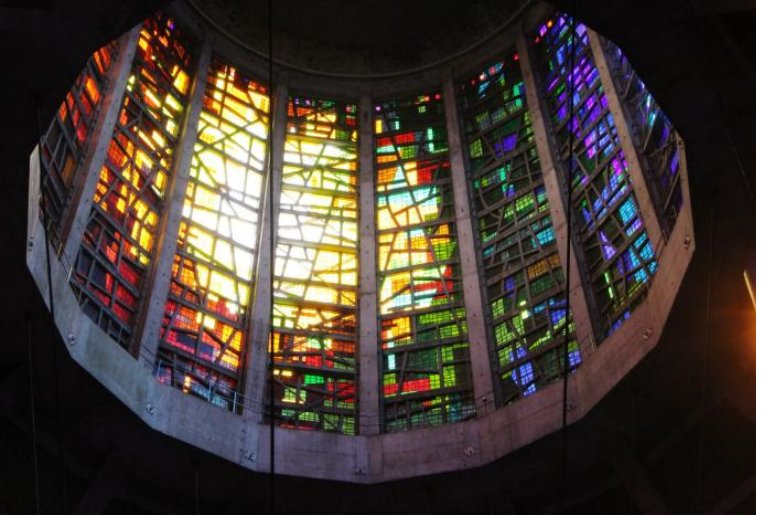
The party was split into guided groups to visit the Cathedral and Crypt. There were several Lady Chapels in the Crypt and a display of ecclesiastical artifacts and memorabilia including items from Pope John Paul’s visit to Liverpool in 1992.
In the main body of the 2000 capacity Cathedral, it was possible to see the central altar, the Lady Chapels and the Walker organ with its 4565 pipes and trumpets, and the stained-glass windows surrounding the whole building.
Tony Barber
The Bridgewater Canal
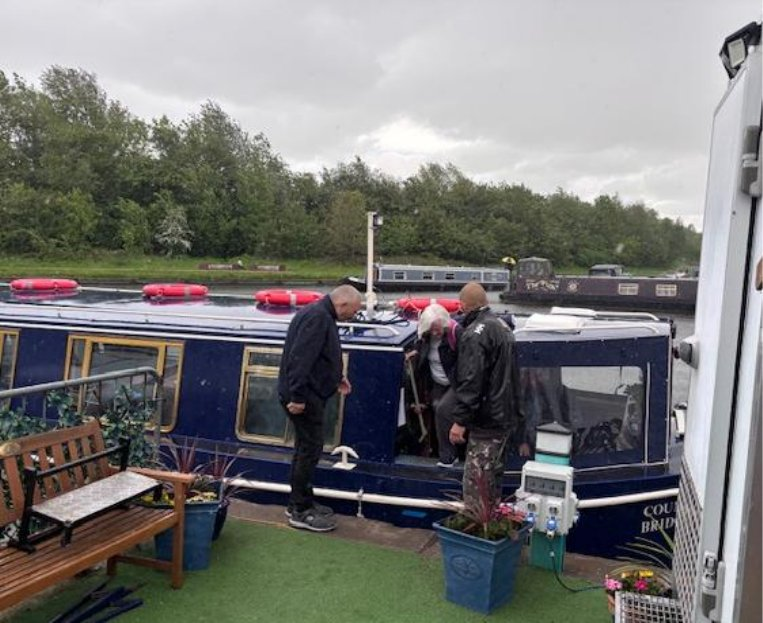
After visiting Liverpool Metropolitan Cathedral and observing our coach driver, Dean, successfully executing a very challenging 110 degree turn into the narrow entrance to the Quayside in Worsley, we boarded the “Countess of Bridgewater”.
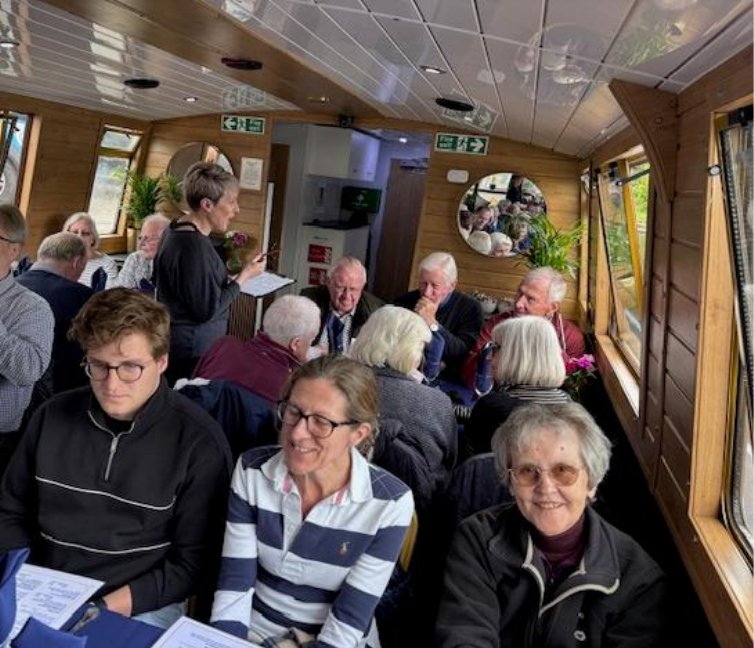
Whilst eating our lunch, we were taken for a 2-hour cruise along part of the 39-mile, 250-year-old Bridgewater Canal, enjoying the scenery, occasional wildlife, and the history of the Canal.
In 1759, 23-year-old Francis Egerton, 6th Earl and 3rd Duke of Bridgewater, realised that canals, like those that he had seen in Europe, could move coal from his colliery in Worsley. He presented a bill for what became the Bridgewater Canal. By following contours, he avoided needing locks on the main canal, from Runcorn (connecting to the Mersey Tideway and access to Liverpool) to Leigh (connecting to the national network). It is claimed to be the first true canal in England and has one of the Seven Wonders of the Waterways, the “Barton Swing Aqueduct” near the Trafford Centre [not seen on our short trip]. At its peak, his canal carried 3 million tonnes of cargo. Today, the canal is owned by the Bridgewater Canal Company Ltd in conjunction with the Bridgewater Canal Trust.
Manchester Museum of Science and Industry
Escaping the rain after our canal voyage, our coach took us the short distance to the Manchester Museum of Science and Industry. The Museum is undergoing considerable renovation so not everything is accessible, but there is still a lot to interest engineers, non-engineers and especially school children.
This is where we could explore 250 years of innovations and ideas that started in Manchester that went on to change the world.
Revolution Manchester includes artefacts of Stephen Hawking’s life and work, and of Mary Berners-Lee, mother of Tim, inventor of the World Wide Web. She was a mathematician in 1951, working as a programmer of the Ferranti Mark 1 computer.
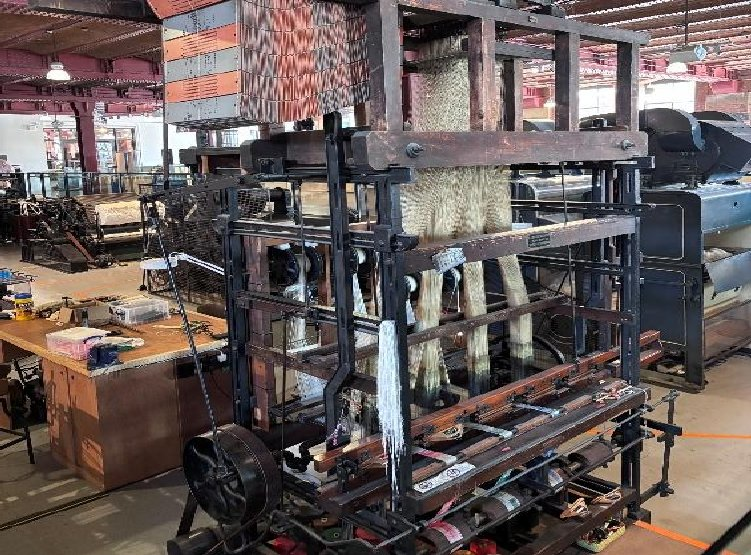
Another form of digital computing on show, albeit from an earlier age, was a 1900 ribbon loom controlled by a Jacquard punched card system (invented in 1804 by Joseph Marie Jacquard) enabling patterned cloth to be made more efficiently.
The Power Hall includes Steam Locomotive SPS 3157, made in 1911 on Merseyside. Its working life in India included its famously pictured journey when overloaded with refugees escaping from Delhi to Pakistan in 1947 at the time of Partition.
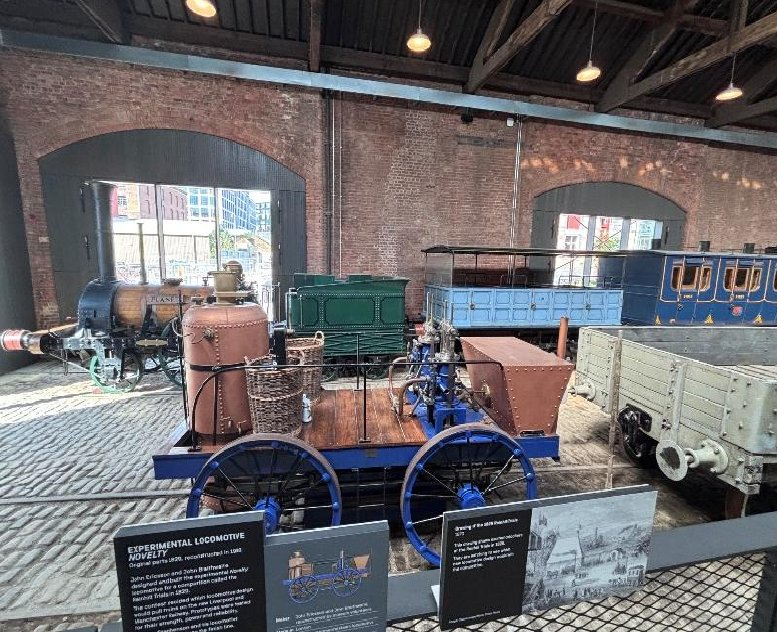
For comparison, and slightly older, originally from 1829 and reconstructed in 1988, is the experimental locomotive “Novelty” which competed in the Rainhill Trials. It lost to Rocket but is still impressive.
Barry Brooks