

Spring Voyage to the North West of England, 13–17 May 2026. This is the second of three reports.
Friday 15th May: West Bank, Widnes
A beautiful morning welcomed us to West Bank Widnes. We were introduced to its history on the north bank of the River Mersey by Ray Jefferson.
In 1847 it was the first town in the country to be based on chemicals. Strategically located at the “Runcorn Gap”, it is the lowest potential crossing point of the Mersey, exploiting the natural narrowing of the estuary where canal, rail and river links prospered. John Hutchinson built his factory based on the Leblanc process to produce the alkalis needed to manufacture soap, glass, paper and textiles. John Brunner and Ludwig Mond both worked there: the origin of what ultimately became the company ICI.
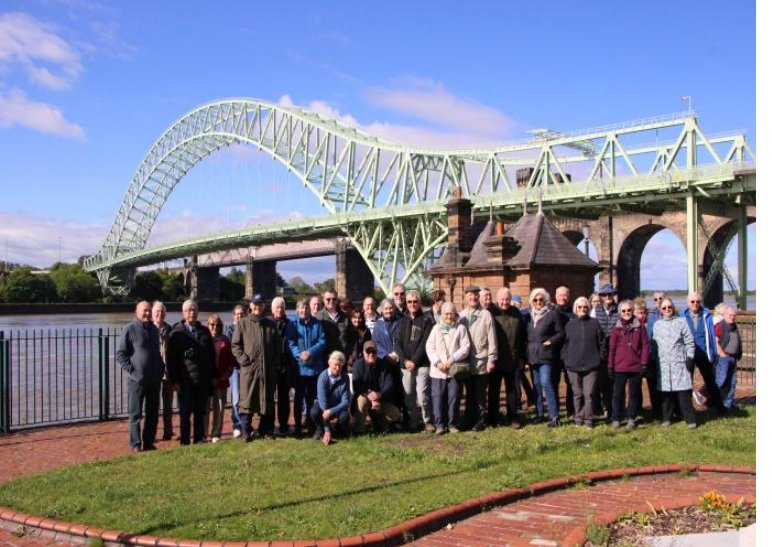
Thomas Telford proposed a chain suspension bridge here in 1817. In front of us were two railway and road crossings. The Ethelfleda railway bridge, designed by William Baker and constructed by Thomas Brassey & Ogilvie in 1868, created a short cut between Crewe and Liverpool.
Ray then explained the history behind the Silver Jubilee Road Bridge, the largest steel arch span in Europe when constructed, at 1082 ft. Constructed in 1961, it replaced the now long-gone Transporter Bridge, the first in Britain and the longest of its kind in the world. Completed in 1905, it let road traffic and passengers cross the Mersey and the new Manchester Ship Canal while maintaining the Admiralty’s 75ft minimum headroom clearance for shipping, without disruptive and costly approach engineering.
As we climbed back onto the coach, we were fortunate to experience the River Mersey incoming rip tide through the “Gap”.
We made our way over the most recent Mersey Gateway Bridge, opened by the Queen in 2017: an elegant harp-style cable stayed deck suspended from three towers.
Anderton Boat Lift
The Anderton Boat Lift opened in 1875, close to Northwich, to move coal into and salt out of the area. It uses two massive water-filled caissons that act as counterweights, efficiently raising and lowering vessels 50ft, using minimal power. Situated between the River Weaver Navigation and the Trent and Mersey Canal, the concept was to make both waterways more profitable.
Severe corrosion and misguided solutions meant the hydraulics had to be removed and replaced with a new lifting mechanism of pulleys, ropes and an electric drive.
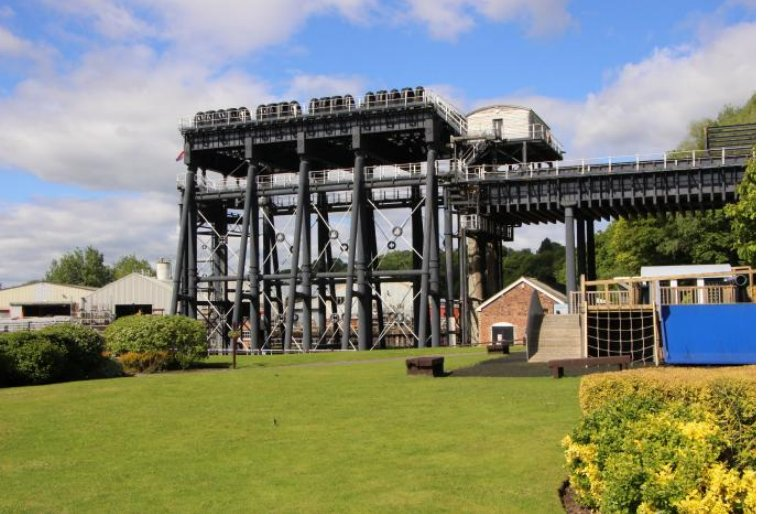
Since its closure in 1983 it has been brought back to its former glory with the support of English Heritage as a Grade I listed structure.
Two enjoyable visits in helping us understand the inventions, achievements and unfailing optimism of Victorian engineers in creating the Industrial Revolution.
Richard Coackley
Jodrell Bank
On our arrival at the Jodrell Bank Observatory we were struck by the sign that advised us to turn off our mobile phones to avoid interference with the radio telescopes – perhaps an appeal to impress visitors more than a strict scientific requirement, especially since our guide received a mobile phone call from the observatory to organise our visit as we arrived.
Although we could have benefitted from a presentation, the information around the site was well presented, and the large Lovell telescope certainly impressive. When built in 1957 it was the largest steerable radio telescope in the world (even now still the third). The combination of its large physical structure, the need for great precision in its operation and the leading-edge astronomical science involved gives pause for thought.
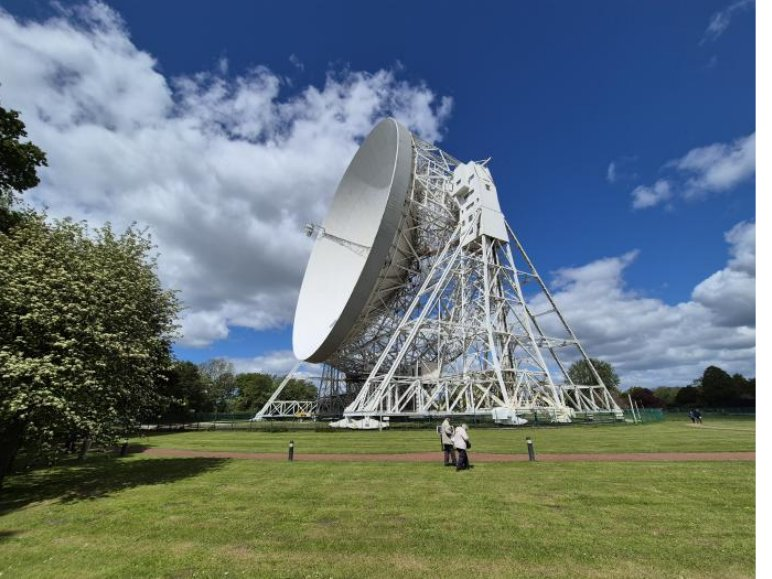
There were straightforward treats to be enjoyed as well, whether that was throwing voices via parabolic dishes or cranking the large orrery to see the planets in motion. Enjoyable as it was, there was so much more to see than our brief visit permitted. Had we had more time, no doubt an exploration of the adjoining arboretum would also have paid dividends.
Quarry Bank Mill, Styal
The splendid time-capsule of Quarry Bank mill was our last visit of the day. The mill building itself displays the history of the complete journey of raw cotton to become finished textile. The intricate workings of the various machines in active use were well exhibited and explained by the volunteers minding them – much appreciated by members of our party.
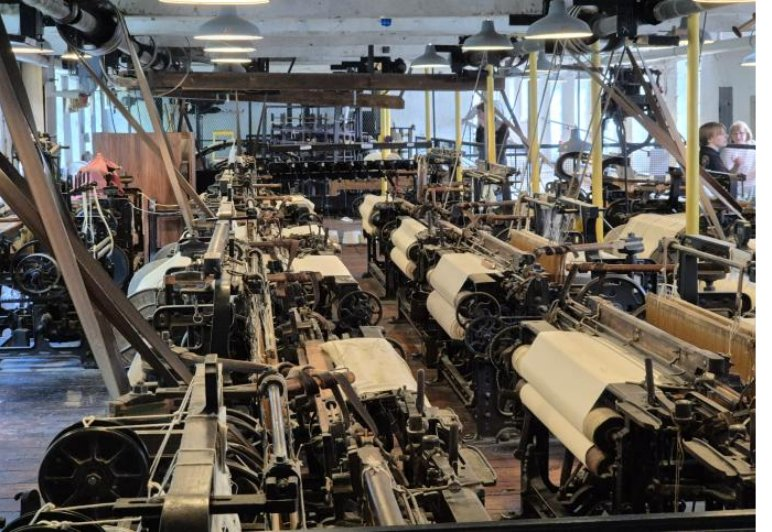
But the displays are more than just about the mechanics. The social and economic aspects of the rise and fall of the textile industry are also covered, including the stories of the young apprentices engaged by the owner, Samuel Greg.
Outside the mill itself there was lots to see – the apprentice house where the youngsters lodged, the nearby village where many workers lived, the beautiful grounds (attractive in the sunshine when we visited), and the fascinating self-cleaning weir on the entrance to the mill race leading to the large water wheel powering the mill.
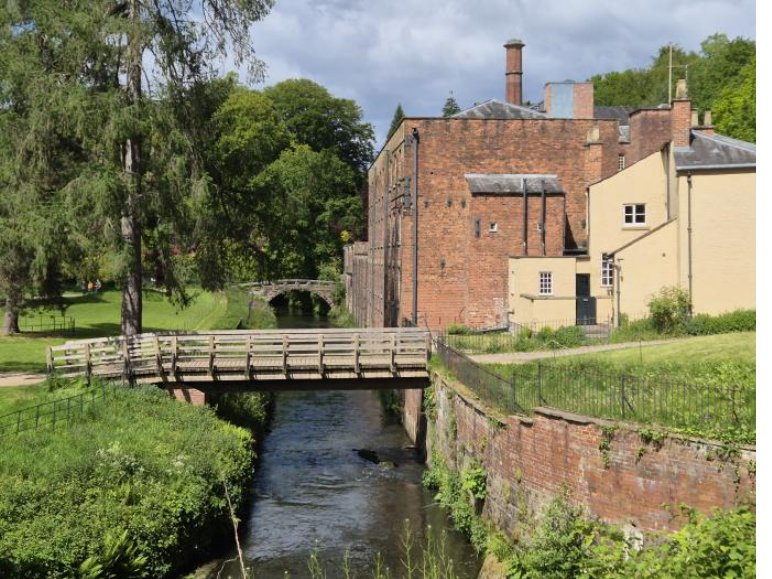
Instead of a couple of hours, a full visit could happily occupy the best part of a day. Some members may consider it worthy of a return visit at some point.
Ferry across the Mersey
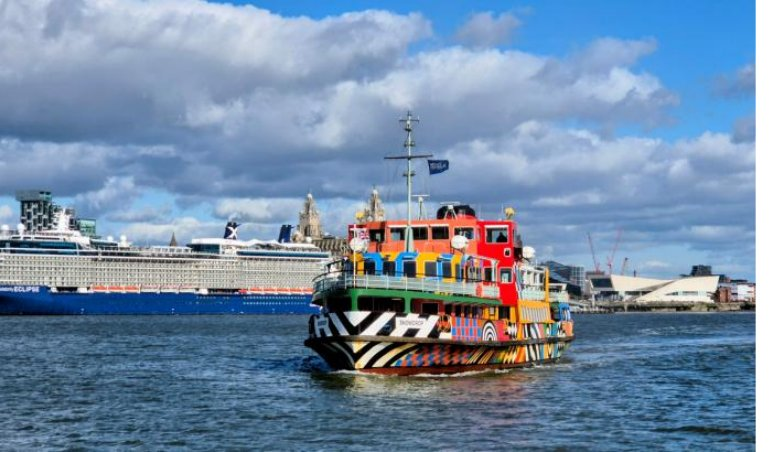
To help work up an appetite for dinner, we returned to Liverpool by ferry across the Mersey from Seacombe, on the Wirral. The Snowdrop was decked out in its colourful dazzle colour scheme, but we were thankfully spared ‘Ferry Cross the Mersey’ by Gerry and the Pacemakers. The Liverpool waterfront is impressive, notwithstanding its loss of World Heritage status because of recent development, including the new Everton football stadium.
Ray Jefferson